
King’s Medical College is a health-sciences and technical training college at Lusoi/Nyange, off Narumoru Road near Nyeri in Nyeri County, Kenya. Its academic catalogue includes Community Health Nursing, Clinical Medicine and Surgery, Mortuary Science, Community Health, Perioperative Theatre Technology and Information and Communication Technology (ICT), together with caregiving, healthcare-support and bridging courses. Prospective students should consider the exact qualification and its regulatory status before enrolling.
King’s Medical College Nyeri location and contacts
The college identifies its campus as Lusoi/Nyange, off Narumoru Road on the Nyeri–Nanyuki corridor. Its postal address is P.O. Box 193–10100, Nyeri. The official admissions contact is 0798 882155, and email enquiries can be sent to info@kingsmedicalcollege.ac.ke.
Course descriptions and enquiries are available through the official King’s Medical College website, academic programmes and admissions page. Applicants can request directions and confirm that the intended qualification is accepting applications.
Diploma in Community Health Nursing
The Diploma in Community Health Nursing prepares learners for professional nursing practice through study of human health, nursing principles, patient assessment, community health and supervised clinical care. The college lists the nursing diploma among its principal programmes, combining theoretical instruction with skills-laboratory and clinical training.
The Nursing Council of Kenya’s approved institutions register lists Kings Medical College, Nyeri for DCHN pre-service training. Applicants should verify that the course title, admission cohort and exact professional pathway match the approved nursing programme. Nursing registration also requires the prescribed examinations and other council conditions.
Diploma in Clinical Medicine and Surgery
Clinical Medicine and Surgery is listed in the college’s course catalogue and concerns training for patient assessment, clinical reasoning, diagnosis, treatment and supervised patient care within the role of a clinical officer. The curriculum for an approved clinical medicine diploma involves biomedical science and extensive practical work in recognised health facilities.
Important course-status warning: The Clinical Officers Council’s accredited training institutions register presently lists Kings Medical College — Diploma in Clinical Medicine and Surgery with status CLOSED. Applicants should not assume a current intake is approved or will lead to professional indexing and registration. Obtain written confirmation directly from the Clinical Officers Council before applying or paying tuition for this course.
Diploma in Mortuary Science
The college lists a Diploma in Mortuary Science covering the appropriate handling of human remains, anatomy-related knowledge, infection prevention, safety and professional and ethical conduct. Mortuary work requires respect for families and the deceased, careful documentation and compliance with health and workplace requirements.
Students should ask about laboratory facilities, supervision, practical placements and the examining body named on the final award. The recognition and legal responsibilities of a mortuary professional are distinct from those of a nurse or clinical officer.
Diploma in Community Health
The Diploma in Community Health focuses on prevention, household and community health needs, communicating health information and helping communities make appropriate use of available services. Learners may study community outreach, basic epidemiology, referral pathways and data collection.
Community health training is valuable for outreach roles, but does not itself authorise independent medical diagnosis or treatment. Prospective students should check the exact certificate or diploma level and the organisation that examines and issues the qualification.
Diploma in Perioperative Theatre Technology
Perioperative Theatre Technology develops knowledge of the surgical environment, preparing and handling instruments, sterile procedures, infection prevention and the technical responsibilities of support personnel working with theatre teams.
Practical training and supervised assessment are central to this field. A theatre technology award should not be mistaken for registered perioperative nursing. Applicants should verify current programme approval, equipment and attachment arrangements with the college and applicable authorities.
Diploma in Information and Communication Technology
The college also lists a Diploma in ICT, covering computer applications, technical problem-solving, systems, software and networking skills, depending on the approved syllabus. ICT training can support careers in office administration, digital services, IT support and computing.
Students should request details of the computer laboratories, course modules, examination board and practical projects included.
Certificate in Community Health
The Certificate in Community Health introduces learners to health promotion, identifying community needs, practical health communication and referral processes. It may be suitable for entry-level community health and development activities, subject to the actual award and employment requirements.
The certificate is distinct from professional nursing; applicants should avoid confusing similar course names across qualification levels.
Caregiving and Healthcare Support certificates
Other programmes include Certificate in Caregiving and Certificate in Healthcare Support Service Assistant. These courses help learners develop practical skills in assisting people with everyday needs, respectful communication, hygiene, comfort and supporting qualified healthcare personnel.
Caregivers and healthcare support workers must remain within their training and supervision responsibilities. A healthcare-support certificate is not a licence to practise nursing or clinical medicine.
Mortuary Science and theatre technology certificates
King’s Medical College also includes Certificate in Mortuary Science and Certificate in Perioperative Theatre Technology in its current programme catalogue. Certificate courses normally provide a foundation in safe procedures and technical support; their breadth and progression routes differ from diploma qualifications.
Applicants should clarify whether the programme is assessed through an external body and whether any supervised workplace practicals are compulsory.
Bridging programmes and entry requirements
The college offers bridging courses in Mathematics, Chemistry, Biology and English for students seeking to strengthen academic results relevant to their intended programme. The programme catalogue explains the available options.
Bridging can support eligibility where recognised by the programme and regulator, but it does not automatically guarantee admission to nursing or clinical medicine. Students should confirm which examination result will be accepted before enrolling.
Practical learning and campus facilities
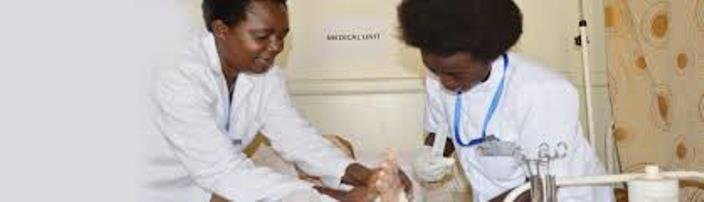
The college describes a clinical skills laboratory, computer laboratory and dedicated study spaces. Simulation and supervised practice help learners apply theory safely before appropriate clinical placements. The campus also includes classrooms and study facilities for independent learning.
Students should ask about approved hospital partners, clinical supervision, patient confidentiality, practical assessment and any accommodation or transport needed for placements.
Accreditation and professional eligibility
The Nursing Council lists the college for DCHN pre-service training. In contrast, the Clinical Officers Council marks the college’s Diploma in Clinical Medicine and Surgery as CLOSED. These statuses apply to different programmes and must not be treated as interchangeable.
For other qualifications, confirm the registered provider and specific approved course through the TVET Authority or appropriate examining body. Where a profession requires regulatory registration, students should establish this separately before paying fees.
King’s Medical College admissions and fees
The official admissions page provides information about applying for the college’s 2026 programmes. Students should contact admissions to confirm dates, academic entry criteria and whether the specific course is permitted to enrol new learners.
Fees can include tuition, registration, examinations, uniforms, laboratory materials and clinical attachments. Request a written fee schedule and verify payment details directly with the college. For the closed clinical medicine programme, secure direct regulator confirmation before making any payment.
King’s Medical College contacts
Campus: Lusoi/Nyange, off Narumoru Road, Nyeri County, Kenya.
Postal address: P.O. Box 193–10100, Nyeri.
Telephone: 0798 882155.
Email: info@kingsmedicalcollege.ac.ke.
Website: kingsmedicalcollege.ac.ke.
